Taking the first step
A simple checklist and a message you can copy when contacting a provider.
Get help reaching outPause. Learn. Find support.
You don’t need to have every answer to take the next step. Explore guides to care, gentle coping tools, and resources for life after loss, at your own pace.
For education and support. These resources do not replace an individual assessment or treatment, and using them does not establish a therapy relationship.
Understanding your options
Care can change as your needs change. You do not have to move through these settings in order. A qualified provider can help you consider safety, daily functioning, and the support available to you.
Program schedules and admission criteria vary. This practice provides outpatient telehealth therapy; the other settings described here are offered by separate programs.
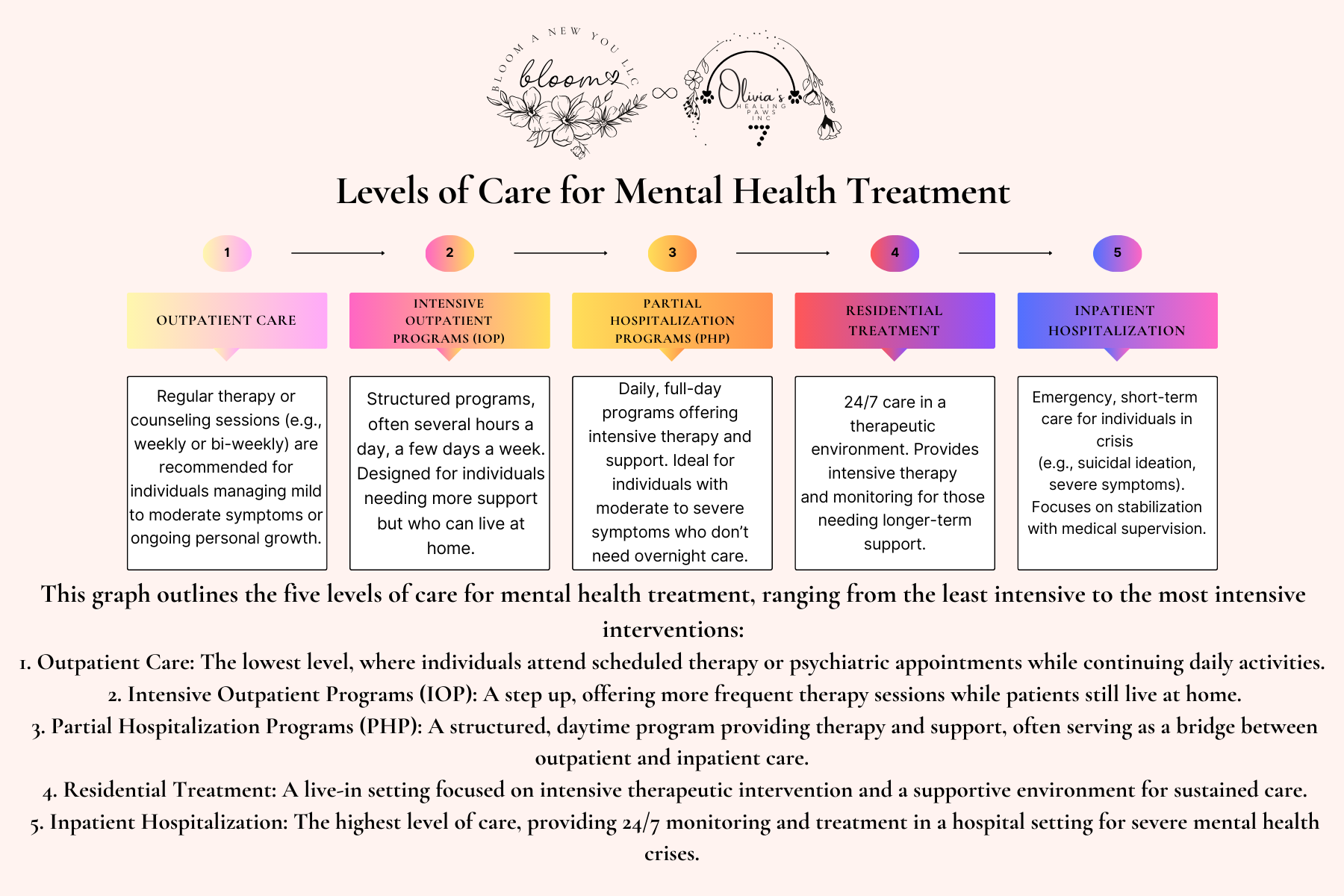
Learn more: SAMHSA’s guide to treatment settings.
Finding the right fit
Credentials are a starting point. Ask about a provider’s license, experience with your concerns, approach, fees, and how you will review progress together.
| Provider | A starting point for support |
|---|---|
| Clinical social workers, counselors, and marriage and family therapists | Talk therapy for emotional, behavioral, and relationship concerns. Individual specialties vary. |
| Psychologists | Therapy and psychological assessment or testing, depending on training and services offered. |
| Psychiatrists and psychiatric prescribing providers | Evaluation and medication care. Some also provide psychotherapy. |
| Primary care providers | An initial conversation about symptoms, physical health factors, and referrals. |
Titles, licensing requirements, and scope vary by state. Ask the individual provider about their qualifications and available services.
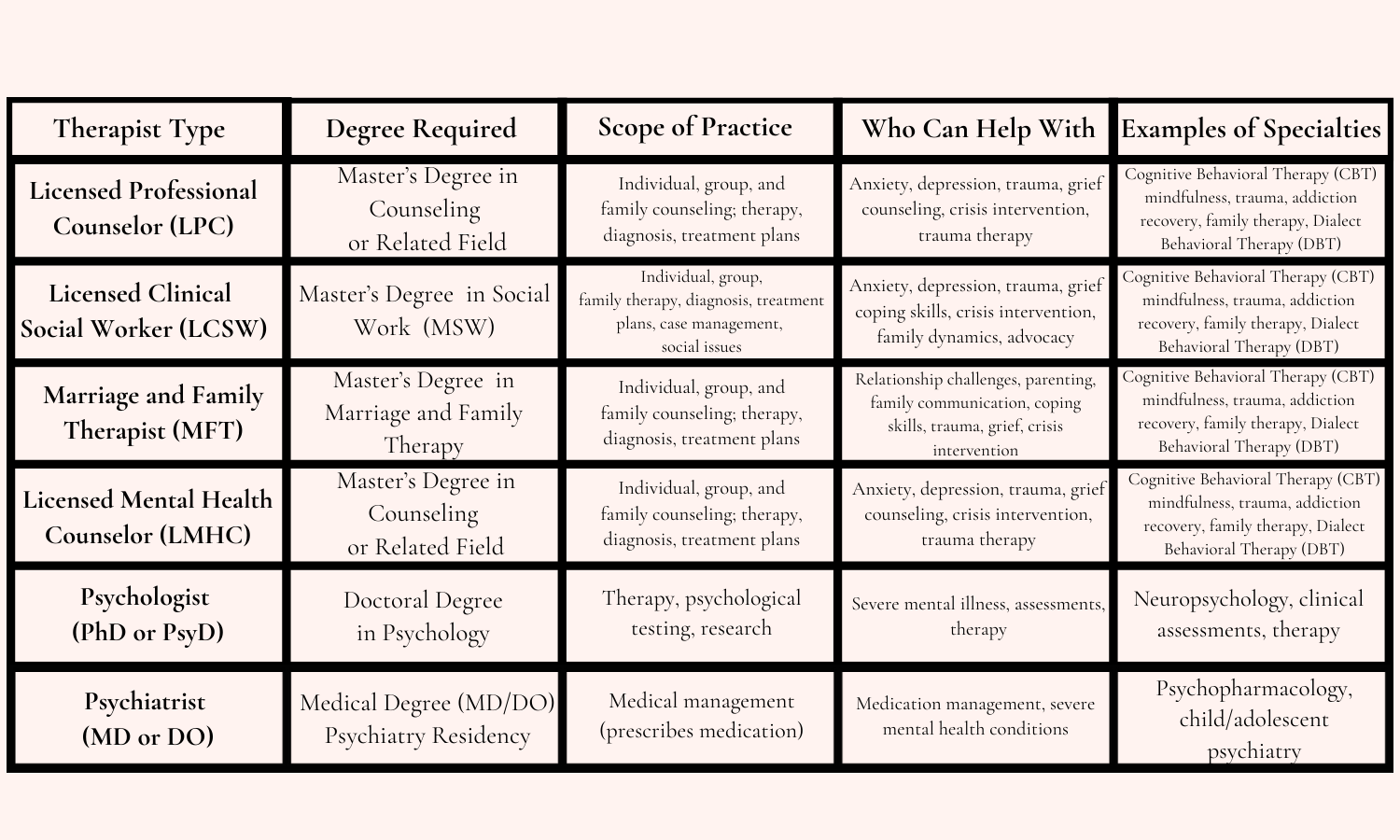
Further reading: NIMH’s guide to psychotherapy and choosing a therapist.
Small moments of steadiness
You can try a tool, notice how it feels, and adjust. There is no need to force an exercise that makes you feel more uncomfortable.
If it feels comfortable, feel the support of the chair or floor. Name a few things you can see and hear. Let your attention return to the room.
Try “I’m noticing sadness” or “I feel overwhelmed.” Then ask yourself, “What is one manageable thing I need right now?”
Consider a small request to someone you trust: “Could you check in with me?” or “I could use company without needing advice.”
Love, loss, and remembrance
The death of a person or a beloved pet can change daily life in ways others may not see. You are welcome to seek support without needing to compare your loss with anyone else’s.
Explore gentle education about early grief and ways to support yourself through difficult days.
Visit the Healing LibraryFind letter writing, memory jar, and remembrance ideas in Olivia’s Corner.
Explore Olivia’s CornerFind ideas for showing up with care and offering support when words feel difficult.
Find grief support guidesAlongside my therapy practice, I founded Olivia’s Healing Paws in memory of my beloved dog, Olivia. The nonprofit offers comfort after loss and mental health education through its comfort kits and Olivia’s Healing Hub.
The Processing Hour Therapy Co., Olivia’s Healing Paws, and Bloom A New You are separate organizations connected by my work and a commitment to comfort and understanding. The Hub’s original graphics are shared here as educational resources.
Learn about Olivia’s Healing Paws and its comfort kitsYou can ask for help
For outpatient therapy in Florida or South Carolina, learn about working with me and request an appointment through a secure booking platform.
Explore appointmentsYour primary care provider and insurance directory can help you explore options. NIMH also offers guidance on finding care.
Find mental health care resourcesWarm lines offer peer support outside a crisis. Hours and eligibility vary, so confirm details with the service before calling.
Explore the Hub’s warm line resourcesThis practice does not provide emergency or crisis services. If you are in immediate danger, call 911. In the United States, the 988 Suicide & Crisis Lifeline provides support for suicidal crisis or emotional distress.
External resources are provided for information. Their services, availability, and privacy policies are managed by the respective organizations. Resource page reviewed November 10, 2026.